Introduction
Corsif has successfully disrupted traditional perceptions of AI product value. This application for seniors achieves impressive monthly revenue of $300,000 through gamified courses and structured learning paths, without complex technology. Its core strategy targets the overlooked Baby Boomer generation, using paid advertising instead of viral marketing, and automating ad production with AI tools. This article deeply analyzes the complete strategy from product design to marketing conversion, revealing how to seize real business opportunities in the tech proliferation phase.
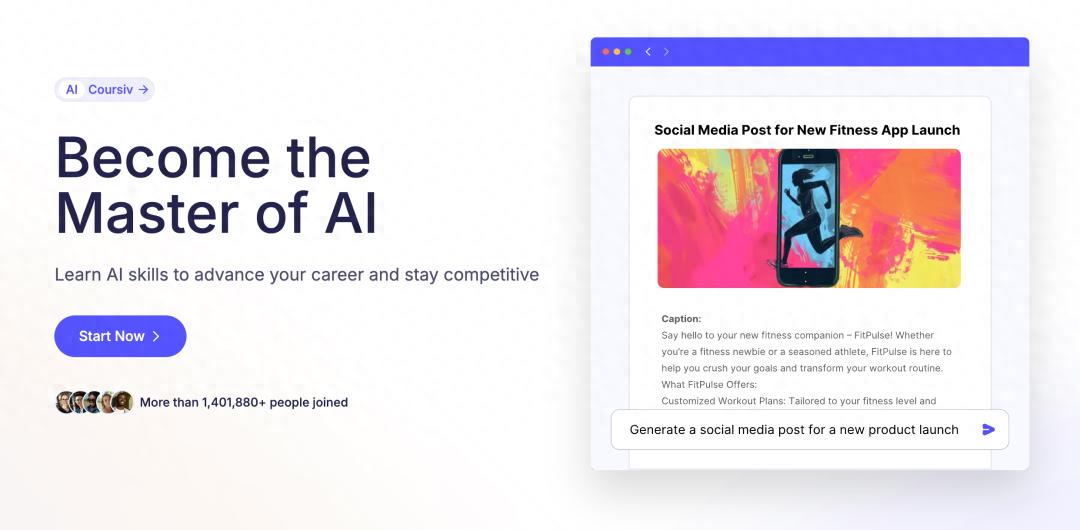
Have you ever thought that teaching people to use AI tools could become a million-dollar business? Recently, I came across a case that reshaped my understanding of product value and marketing strategy. An app called Corsif teaches seniors how to use ChatGPT in a gamified manner similar to Duolingo, generating over $300,000 in monthly recurring revenue (MRR). This is not a complex tech product, nor is it truly innovative, but it has found a market gap that everyone else has overlooked. Growth marketing expert Stef has conducted an in-depth analysis of this case, which made me realize that in this AI era, the products that truly profit are often not the most technologically advanced, but those that understand user psychology and tell compelling stories.
Having been involved in content creation for a while, I have observed the rise and fall of various AI products. Honestly, my first reaction upon seeing Corsif’s success was shock. The core functionality of this app is astonishingly simple: it teaches users how to write prompts for ChatGPT, how to generate images using Midjourney, and how to synthesize speech with ElevenLabs through basic courses. This information can be found for free on YouTube, yet Corsif manages to get users to willingly pay for a subscription. What kind of business logic lies behind this? Why has such a basic product achieved such success? I spent a lot of time pondering this question and gained many insights from Sebastian Stef’s analysis.
Simplicity as the Key to Success
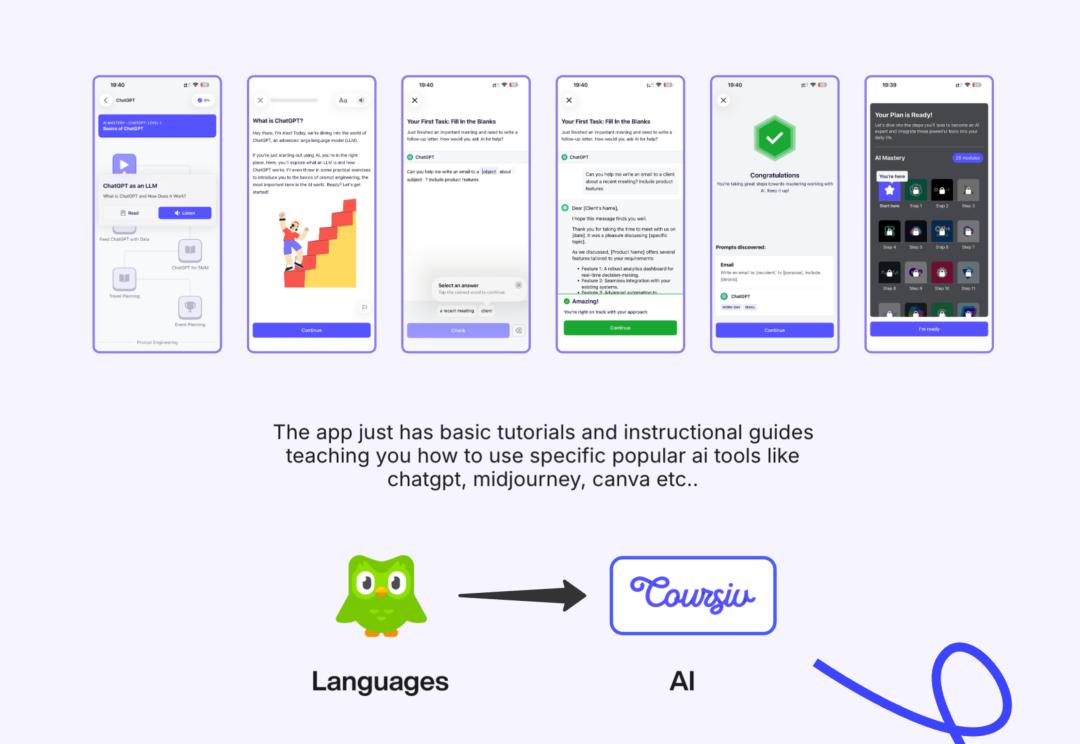
When I first saw Corsif’s product demonstration, I was somewhat disappointed. The app’s interface consists of course pages that explain what ChatGPT is, provide some prompt templates for users to fill in, and then display a green checkmark saying “Well done,” followed by a congratulatory page. There are no complex features, no cutting-edge technology, and not even an integration of ChatGPT’s API. Sebastian Stef bluntly states in his analysis: “This might be the most basic application you can imagine. You can find the same information in any YouTube video; they just gamified and monetized it, and established a quite successful business.”
This simplicity initially confused me. In an era where AI products are emerging one after another, everyone is competing on technology, features, and models, trying to create the next Cursor, a wrapper for ChatGPT, or various complex tools. But Corsif took a completely opposite route: they created an extremely simple product with just some prompt explanations and congratulatory messages, and they succeeded. This made me rethink the essence of product value.
I believe there is a crucial realization here: the success of a product does not depend on its complexity, but on its ability to solve the real pain points of users. For tech enthusiasts and younger individuals, learning AI tools is a natural process; we actively search for tutorials, read documentation, experiment, and explore. However, for the Baby Boomer generation, the situation is entirely different. They know AI is important; they hear about ChatGPT in the news, and their children and friends discuss these tools, but they do not take the initiative to learn. It’s not because they are incapable, but because they are unwilling to spend time searching for fragmented information, watching lengthy YouTube tutorials, or digging through Reddit forums for answers.
Sebastian Stef’s analysis accurately captures this: “These individuals know this information exists, they know AI is important, and they know they should use AI, but they don’t care. They are lazy. They won’t actively seek out AI education or information on the topic. What they need is a clear and personalized reason to care about AI.” This insight was an eye-opener for me. Corsif’s success is not due to the unique knowledge it imparts, but because it lowers the learning barrier and eliminates all friction.
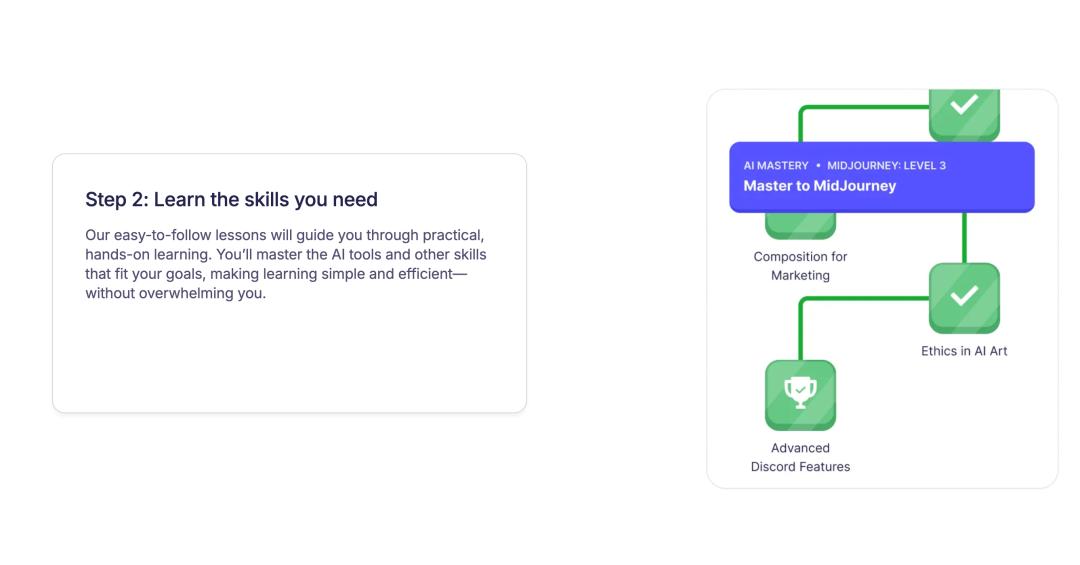
Users do not need to search the internet, piece together various information, watch YouTube tutorials, read Reddit threads, or listen to podcasts. They just need to open an app, follow a linear course structure, and learn step by step, just like studying from a textbook in college. This structured, hands-on course setup is precisely what beginners want. You give them a simple interface, add some gamified reward mechanisms, like badges, streaks, and progress bars, and they will find the learning process achievable, enjoyable, and worth returning to.
I am reminded of Duolingo’s success. Duolingo doesn’t actually teach you to speak a language fluently; most users cannot truly master the language they are learning, yet they still return daily to maintain their streaks because the entire experience is gamified, making continuous learning rewarding, akin to a meditative practice. Corsif employs the same strategy; they are not selling knowledge but rather a learning experience that makes users feel they are progressing and becoming smarter.
This has deepened my understanding of product positioning. We often fall into the misconception that users purchase products because of how powerful the features are. In reality, users buy based on the change the product brings them, the sense of security that comes with “I can finally keep up with the times,” and the sense of accomplishment that comes with “I can use these high-tech tools too.” Corsif is not selling AI tutorials; they are selling confidence, direction, and clarity.
Marketing as the True Product
After watching Sebastian Stef’s breakdown of Corsif’s marketing strategy, my biggest takeaway is that in this case, marketing itself is the product. The product is merely a vessel; what truly drives users to pay is the “aha moment” created by marketing. This perspective may seem counterintuitive, but it is the core of this case’s success.
Sebastian Stef points out in his analysis: “Users are not paying for knowledge. All this knowledge is super basic; this is not a groundbreaking application. What they are really paying for is a reason to care about AI. They are paying for clarity, direction, and confidence, knowing, ‘Oh my, I want to be part of this new thing.’ They pay for clear benefits, such as promotions, jobs, saving time, and reducing stress.” This statement made me reevaluate the entire user conversion process.
I noticed that all of Corsif’s advertising materials do the same thing: create urgency and relevance. They are not saying, “We have the best AI course,” but rather, “If you don’t learn to use AI, you will be left behind,” “Using AI can help you get promoted,” and “AI can help you earn more money, save time, and reduce work stress.” These ad contents directly hit users’ pain points and desires, prompting them to think, “I must learn AI now.”

This is what I refer to as the “aha moment” created by marketing. Users already know AI exists and vaguely feel it is important, but they lack the real motivation to learn. Corsif’s ads, through specific, achievable benefits like promotions, salary increases, career development, interpersonal relationships, and relevance, suddenly make users realize, “I need to learn AI right now.” Once you create this moment of realization and place a big purchase button below it, conversion becomes very simple.
I believe there is a deeper insight here: people do not learn for the sake of learning; they learn to solve problems. If you just tell users, “Here are some AI tutorials,” they might think, “I’ll look at it later.” But if you tell them, “Your colleagues are using AI to improve work efficiency; if you don’t learn, you will fall behind in workplace competition,” they will immediately feel the urge to act. Transforming abstract technical learning into concrete life improvements is the core of Corsif’s marketing strategy.
Interestingly, once users enter the app and begin learning, the gamified experience keeps them subscribed and prevents churn. They want to continuously feel the sense of progress, complete those courses, and earn those badges and achievements, rather than just collecting a bunch of useless YouTube video links. This gamification mechanism makes users feel their subscription fee is worthwhile, even if they may not have truly mastered many practical skills.
My reflection on this phenomenon is that in an age of information overload, the value of filtering and organizing information often surpasses the value of the information itself. Free information is everywhere, but how to efficiently acquire and digest this information, and how to integrate fragmented knowledge into a structured learning path, is what is scarce. Corsif does just that; they integrate the free information scattered across the internet into a structured, low-friction learning experience and successfully monetize it.
Growth Strategy Based Solely on Paid Advertising
If you have followed successful app growth cases in recent years, you will notice a clear trend: a large amount of organic content is posted on TikTok and Instagram, hoping for viral spread to gain users. Apps like Cali, Bible Chat, Starcross, and Profit have adopted this strategy, posting a large amount of content daily across multiple accounts, hoping that some of it will go viral and gain significant free exposure and downloads. Sebastian Stef has repeatedly emphasized the effectiveness of this strategy in his other case analysis videos.
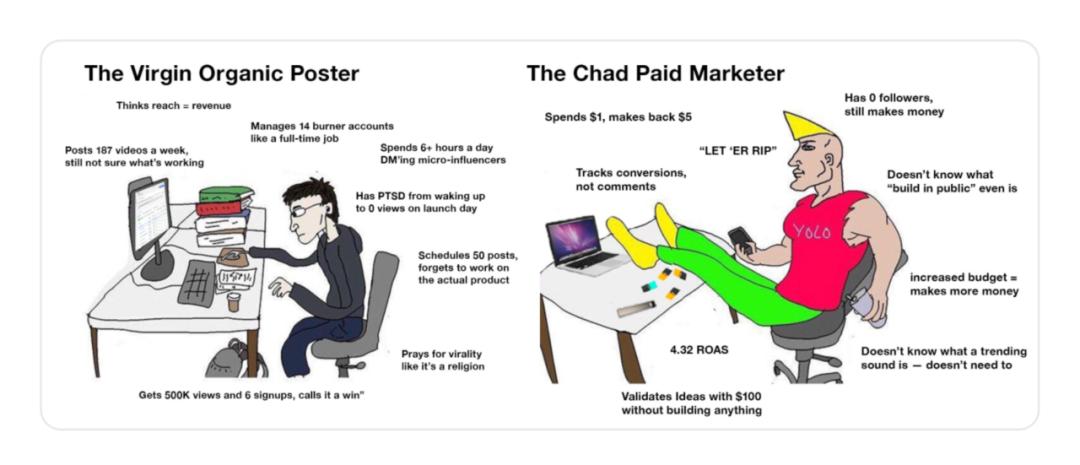
However, Corsif took a completely different path. They rely almost entirely on paid advertising for growth. This strategic choice intrigued me because it subverts the mainstream practices of app marketing. Sebastian Stef points out in his analysis: “While they do have some viral videos, most viral content is just basic memes that don’t mention Corsif or AI education at all; the target audience is mainly young people.”
From the data, Corsif’s organic content on TikTok and Instagram performs poorly. Most videos only garner a few thousand views, with little real interaction. Those that seem to have high view counts are actually promoted through Spark Ads, a TikTok ad format that displays paid ads within organic content, which you can tell from the extremely low comment and like ratios. They did not sponsor thousands of influencers to promote the app, did not operate hundreds of accounts to post massive amounts of content, and did not have a UGC (user-generated content) creator army, nor did they release any truly viral videos that promote the product.
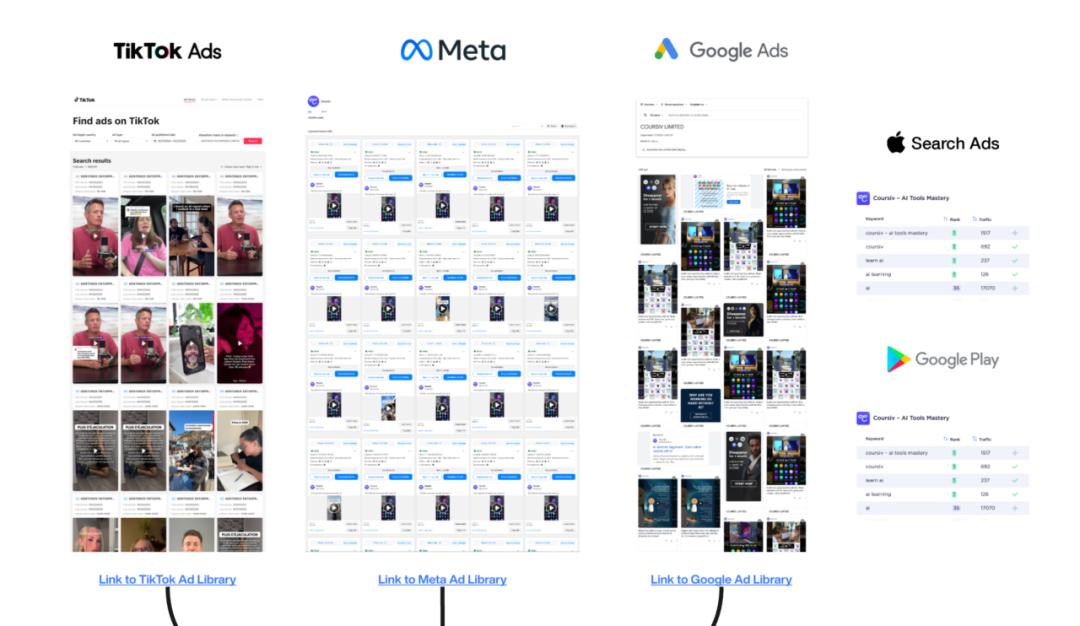
So how did they grow? The answer is straightforward: pure paid advertising. They place ads on every available platform, from TikTok to Instagram, Facebook, YouTube, search ads, Google Ads, and more. Sebastian Stef vividly states: “While others are making another ChatGPT wrapper targeting young people, posting viral videos on 200 different accounts, these guys are just in autopilot mode producing low-quality AI ads and targeting the Baby Boomer generation with paid ads.”
I believe there is profound business logic behind this strategic choice. Organic content growth seems appealing because it is theoretically “free,” but in reality, it is very costly. Sebastian Stef detailed the true costs of organic strategies: “To make organic content work, you need to post 2 to 5 videos daily on each account continuously to realize the economic benefits of viral spread. If you don’t want to produce this massive amount of content yourself, you must hire influencers, send thousands of messages to get one reply, and then pay $2,000 to $10,000 to buy someone else’s audience. If you target small influencers, you may need to pay a monthly retainer plus CPM and bonuses, and you have to manage all these people and incentivize them, which can become very difficult, especially if you’ve never done this before.”
Moreover, viral spread is inherently unpredictable and unstable. Unless you are exceptionally skilled, you cannot guarantee consistent results. Managing thousands of accounts and partnerships requires significant upfront capital investment. In contrast, a paid advertising strategy provides immediate returns and data feedback. Even if you are just buying data on “what not to do,” the costs will be significantly lower than organic strategies.

Sebastian Stef gave a great example: “You only need to spend $50 testing five ad concepts to see which works best for target user groups 1, 2, 3, and pain points/desires X, Y, Z. You only need to spend a few hundred dollars to get answers, rather than spending hundreds or thousands on a single sponsorship to obtain the same data.” This rapid trial-and-error and quick iteration capability is the core advantage of paid advertising.
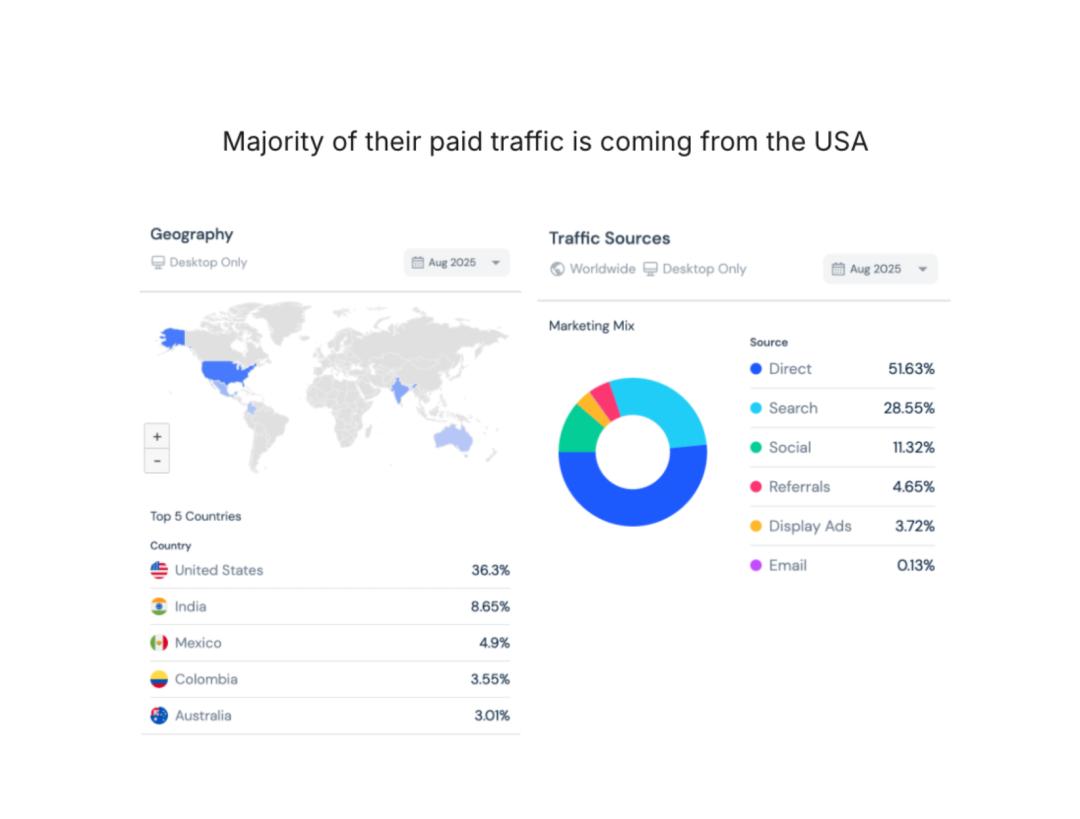
My reflection on this strategy is that when choosing growth channels, do not blindly follow trends; instead, make choices based on your target users, product characteristics, and resource availability. For Corsif, their target users are Baby Boomers, who are not very active on TikTok and Instagram, and even if they are, they are unlikely to download the app just because they see a viral video. They are more likely to search for “how to learn AI” or “how to use ChatGPT” for solutions or become interested after seeing an ad while browsing Facebook. Paid advertising can accurately reach this group, while organic content spread tends to reach younger users, which is not Corsif’s target market.
AI-Driven Automated Ad Factory
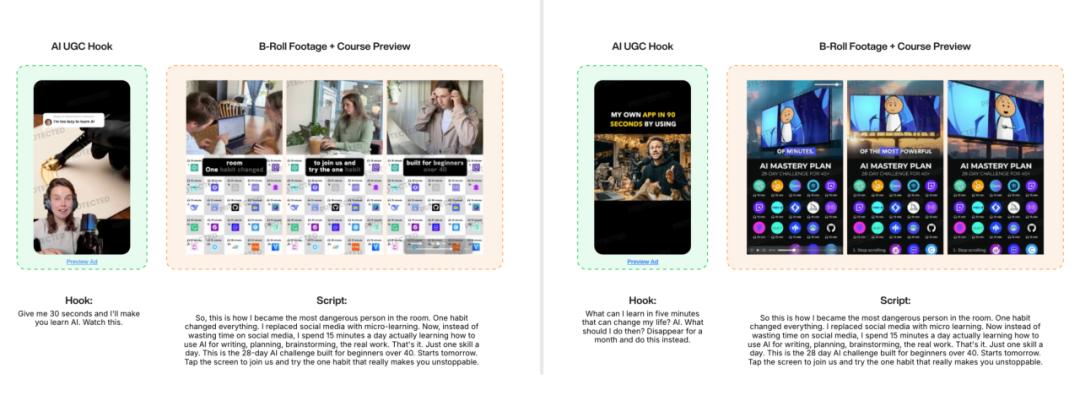
The most astonishing aspect of Corsif’s advertising strategy is how they have fully automated the ad creative production process using AI tools. Sebastian Stef showcased their ad materials, and I found that almost all ads used the same AI-generated virtual avatar, just changing different hooks and scripts. They did not hire real actors or have complex shooting processes; all ad materials were produced in bulk using AI tools.
Specifically, they used an AI UGC creation platform called Arcads. This platform can generate videos of virtual characters speaking any script you write, making it look like a real person is speaking. Sebastian Stef detailed the entire creation process in the video: “You select a creator, like the one they used named Jasmine, then you write a quick script or generate one with AI for Jasmine to read. After that, you can generate some B-roll material within Arcads, like a scene of a girl in a white shirt working on a laptop at a table.”
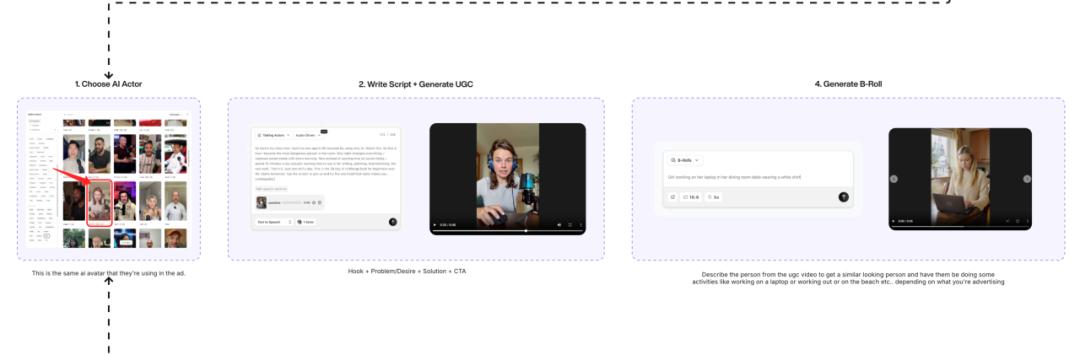
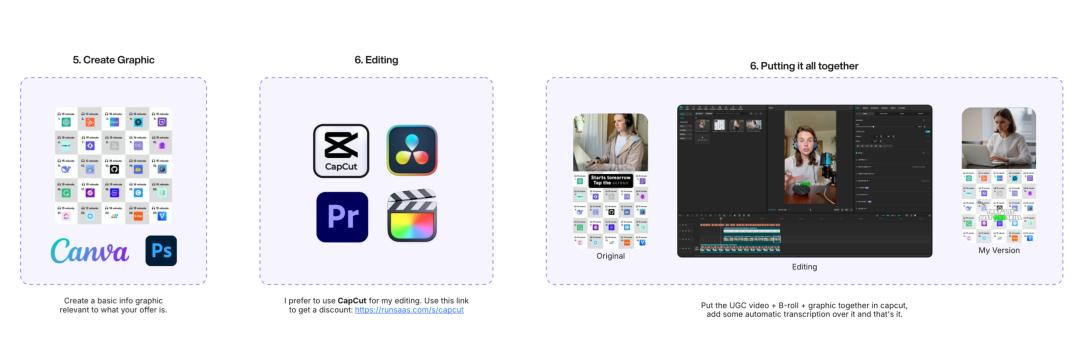
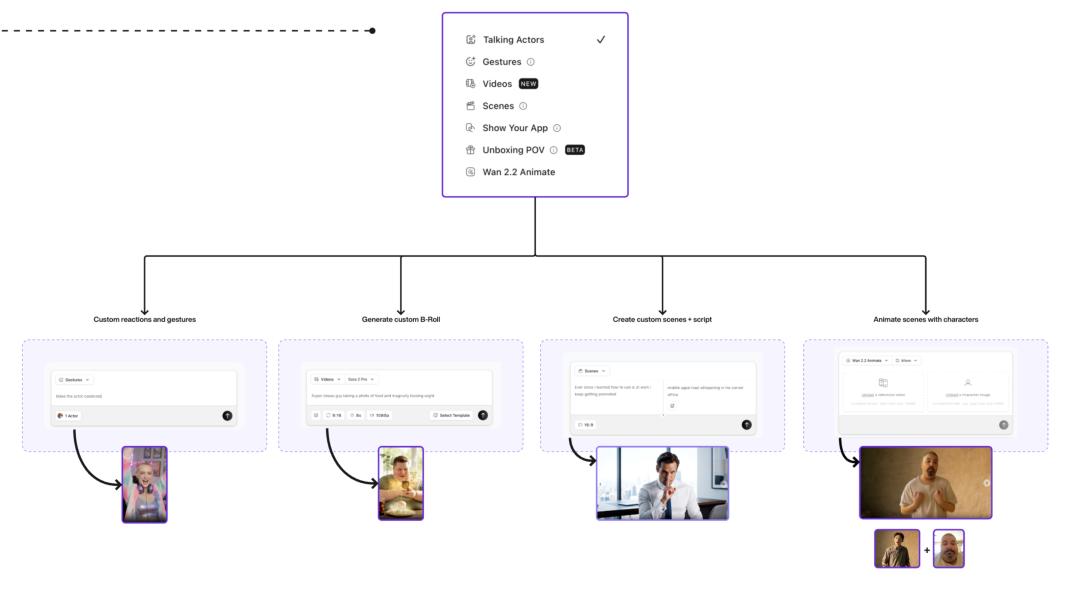
The subsequent process is even more simplified. They create some simple graphics in Canva or Photoshop, such as “Lesson One,” “Lesson Two,” and feature display images. Then they open any video editing software; Sebastian Stef recommends using CapCut because it is simple and free, placing the virtual host at the bottom, the B-roll material, and graphics after the hook, enabling automatic subtitle generation, and a complete ad is ready. The entire process may take only 10 to 15 minutes.
The key is that this process can be infinitely replicated and varied. You can change the hook, the background, the virtual host (switching between male or female, young or old), add elements (like a kitten, or have them in a podcast scene, in a car, etc.), and continually test which combinations work best. Sebastian Stef said: “They launch about 50 such test variants daily. All of this is automated; they just keep rolling out different ad variants until they find effective combinations of virtual images, hooks, and scripts, then continue producing more variants until performance declines, and repeat the process.”
I believe this automated ad creative factory model represents a significant trend in future marketing. Traditional ad creation requires a team of writers, directors, actors, photographers, and editors, which is costly and time-consuming. Now, with AI tools, one person can produce a large number of ad variants in a short time, quickly test market responses, and find the most effective combinations.
The core advantage of this model is speed and scale. You can test 50 different creative directions in a single day, quickly obtain data feedback, and then concentrate your budget on the best-performing creatives. This rapid iteration capability is unimaginable in traditional ad production models. Moreover, as you continue to test and accumulate data, you gradually build a knowledge base about “what works and what doesn’t,” making future creative decisions increasingly precise.
Sebastian Stef also mentioned an implementation suggestion: “As you start to scale and earn more money, you can hire editors, scriptwriters, and virtual assistants from some third-world countries to manage the entire ad creative factory, automating the production of these contents.” This industrialized and scaled approach to creative production is very much worth learning.
My reflection is that AI tools are not just efficiency-enhancing aids; they are fundamentally changing the rules of the marketing game. Previously, the bottleneck in marketing was creative production capacity; how many creators you could afford to hire and how much content you could produce essentially determined your marketing scale. But now, AI tools bring the marginal cost of creative production close to zero, making the real bottleneck your testing speed and data analysis capability. Whoever can test more creative variants faster and interpret data feedback more accurately will gain an advantage in market competition.
Two Ingenious Conversion Funnels
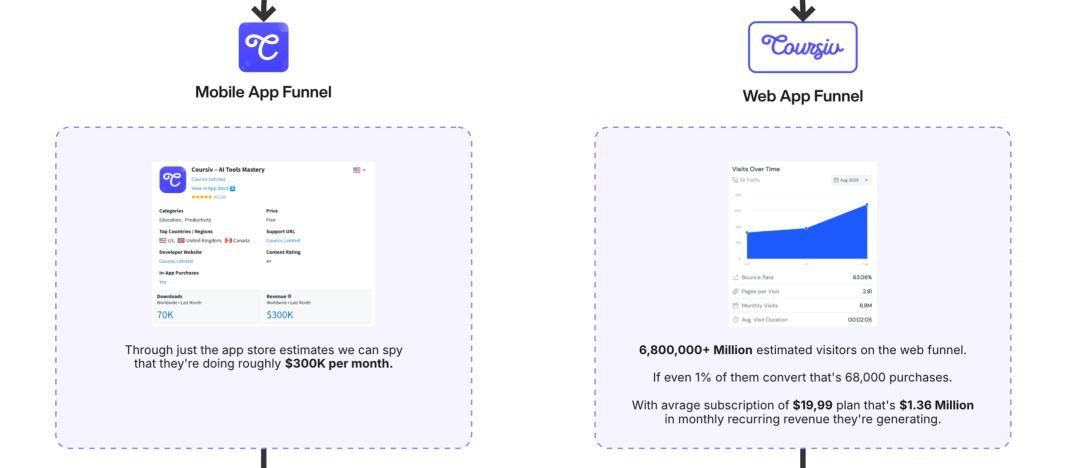
Another impressive design in Corsif’s business model is that they operate two completely independent conversion funnels: a mobile app funnel and a web app funnel. This is not a simple multi-channel layout but a well-thought-out strategic choice aimed at avoiding platform fees and maximizing conversion rates.
Sebastian Stef explains the differences between these two funnels in detail: “The mobile app funnel primarily serves users who actively search for ‘how to learn AI’ or ‘how to use ChatGPT.’ They will search the app store, download the app directly, and complete payment within the app, which means paying Apple a 30% platform tax. Moreover, the in-app payment walls and guidance processes are subject to Apple’s review, limiting flexibility.”
In contrast, the web app funnel gives them complete control. All paid ad traffic is directed to the web side, where users complete the entire guidance process and payment before logging into the mobile app. This approach has three significant advantages: they can modify the guidance process and payment walls at any time without waiting for Apple’s review; they can use third-party payment gateways like Stripe to completely bypass Apple’s 30% platform tax; and they can design longer, more persuasive sales pages without being restricted by app store policies.
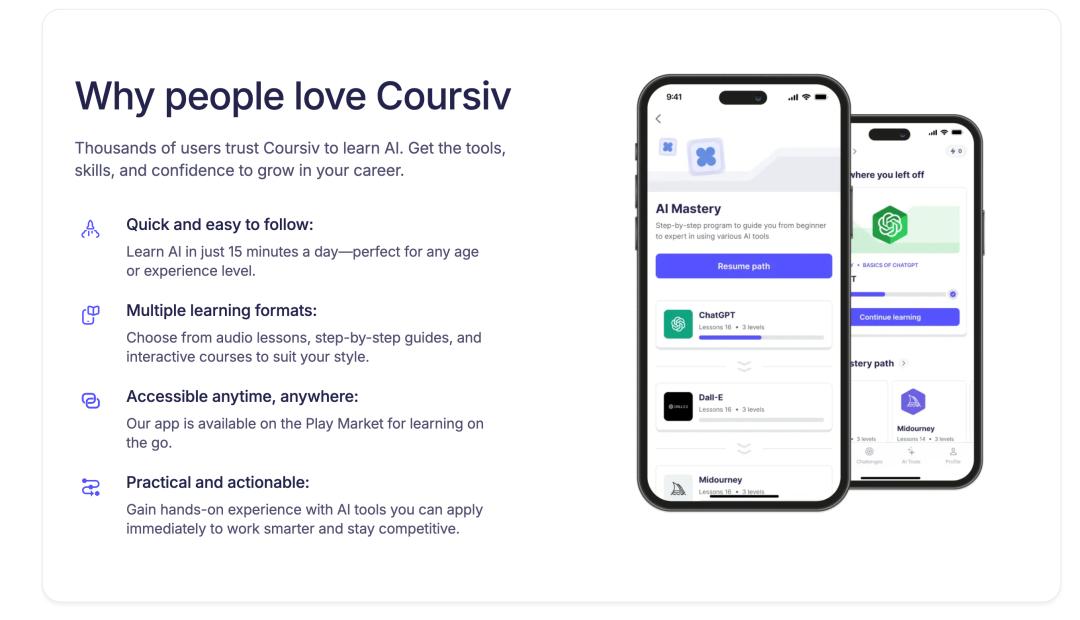
I carefully studied their web funnel design and discovered many details worth learning. The entire process starts with a simple question: “Are you working for a company or for yourself?” Then follows a series of carefully designed questions, such as “Do you feel overwhelmed by AI?” “Are you comfortable using AI?” These questions not only collect user information but also importantly prompt users to reflect on their relationship with AI, establishing a sense of urgency.
Next comes a series of questions about goals and achievements, like “What do you want to achieve by learning AI?” Options might include “getting promoted,” “buying a house,” “vacation,” or “buying a car.” Sebastian Stef pointed out a clever psychological trick: “Once you start talking about buying a house, vacation, or car, asking for a daily subscription fee of $1 suddenly seems very cheap.” This is a classic application of the anchoring effect.
Then comes the trust-building segment, showcasing user reviews, certification logos, media coverage, etc., to enhance credibility. Only then is the payment wall introduced, and this payment wall is designed very interestingly. They provide a free trial reminder and guidance, followed by a forced payment wall where users must start a trial or pay for a subscription to enter the app.
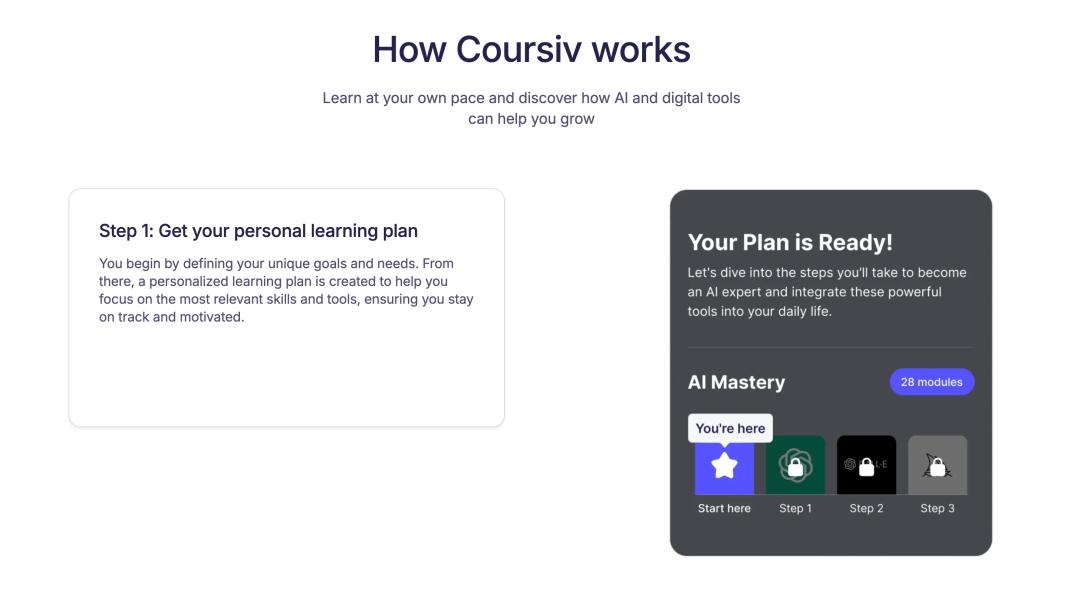
I particularly noted their pricing strategy. They mainly offer two plans: monthly subscription and weekly subscription, but they emphasize the price as “how much per day,” such as “99 cents a day,” “71 cents a day,” or “48 cents a day.” This is another psychological trick, breaking the price down into smaller units to make it seem more acceptable. They even compare the price to Starbucks coffee and other online courses to reinforce the impression that “this is cheap.”
Even more exciting is their upsell strategy. After users complete their initial purchase, instead of directly entering the app, they are directed to a one-time offer page selling the “Complete AI Success Kit” for $19.99, which includes AI credits, prompt libraries, productivity prompts, etc. This is a classic profit maximization strategy, as users have just completed a purchase, their psychological defenses are lowest, and they are most receptive to additional purchases.
If users attempt to exit this upsell page, they will see an even larger discount—from $19.99 down to $15.99, a 60% discount. This is a typical retention strategy, capturing the last chance before users leave. Only after completing all of this do users finally enter the mobile app to start learning.
My reflection on this entire funnel design is that every step in designing a user conversion path should have clear goals and psychological principles supporting it. Corsif’s funnel design demonstrates a deep understanding of user psychology, from establishing demand to alleviating doubts, from anchoring prices to utilizing scarcity and urgency; every step is meticulously designed. Operating two separate funnels for mobile and web also showcases a deep understanding of platform rules and business models, allowing them to maximize revenue while maintaining rapid iteration capabilities.
Deep Thoughts on This Case
After completing the analysis of the Corsif case, I have several deeper reflections that may provide insights for my content creation and the entire industry.
I believe the biggest takeaway from this case is that in the AI era, real business opportunities often lie not in the technology itself but in the popularization and application of technology. Everyone is competing on technology, trying to create the most advanced AI models, the most complex AI agents, and the most powerful automation tools. But Corsif chose a completely different path: they are not innovating technology but popularizing it. Their product has almost zero technical content, yet they have identified a massive market demand—helping those left behind by technological progress keep up with the times.
This reminds me of the diffusion of technology. The adoption of any new technology follows a curve: innovators, early adopters, early majority, late majority, and laggards. Currently, AI technology is still in the stage of transitioning from early adopters to early majority, while the Baby Boomer generation mostly belongs to the late majority or even laggards. This group is large, has purchasing power, and has a learning need, but it has been overlooked by most AI products because everyone is chasing tech enthusiasts and younger users. Corsif saw this market gap and met this overlooked demand with an extremely simple product.
My second reflection is about the essence of product value. We often say, “Products must have value,” but what is value? The Corsif case tells me that value does not equal the complexity of features or the advancement of technology. Value is what users are willing to pay for, and the reasons users pay often relate not to the product itself but to the change the product can bring. Users are not buying AI tutorials; they are buying the security of “I can keep up with the times,” the possibility of “I can use these tools to improve work efficiency,” and the guarantee of “I won’t be eliminated.”
This realization makes me reevaluate the value of content creation. The content I create also conveys information and knowledge, but what users truly need may not be the information itself but the change that information can bring them. I should think more about what specific problems my content can help users solve, what practical benefits it can bring them, and what kind of emotional experiences it can evoke. These are the true values of content.
My third reflection is about the ways to achieve scalable growth. Sebastian Stef’s analysis made me realize that there is no one-size-fits-all growth strategy. Organic content growth, paid advertising, influencer collaboration, community operations, B2B marketing, conference promotion, etc., each method has its applicable scenarios. The key is to choose the most suitable growth strategy based on where your target users are, how they make decisions, and your resources and capabilities.

Corsif chose paid advertising over organic content not because paid advertising is inherently better but because this strategy better suits their target users and business model. Baby Boomers are unlikely to download the app just because they see a viral TikTok video; they are more likely to search for solutions or become interested after seeing an ad. Paid advertising provides a predictable, scalable growth path; as long as unit economics are positive, you can continuously invest budget to acquire users.
This inspires me: do not blindly follow so-called “best practices”; instead, deeply understand your target users and business model to choose the most suitable growth path. Perhaps for my content creation, focusing on a specific platform, building my community, or collaborating with other creators may be more effective than pursuing viral spread.
My fourth reflection is about how AI tools lower the barriers to entrepreneurship. Corsif’s success largely depends on the development of AI tools. They use Arcads to generate ad materials in bulk, AI to generate scripts and B-roll materials, and automation tools to manage ad placements. These AI tools allow a small team to achieve the workload that previously required a large advertising company.
This opens up new possibilities for entrepreneurship in the AI era. Previously, if you wanted to create an app and launch large-scale advertising, you needed to hire a team of writers, directors, actors, photographers, editors, and ad optimization specialists, with initial costs potentially reaching hundreds of thousands or even millions of dollars. But now, with AI tools, you can quickly start with very low costs and then rapidly iterate based on market feedback. This significantly lowers the barriers and risks of entrepreneurship.
Sebastian Stef said something in the video that left a deep impression: “If you haven’t implemented and used AI, then brother, I’m sorry, you’re already behind.” This is not an exaggeration but a reality. Under the same market conditions, entrepreneurs using AI tools can operate businesses at lower costs, faster speeds, and larger scales, while those not using AI will be at a clear disadvantage in competition.
My fifth reflection is about the importance of market positioning. Corsif’s choice of the Baby Boomer generation as their target market is very clever. This group has several important characteristics: large scale, strong purchasing power, low price sensitivity, short decision-making cycles, and less competition. In contrast, if Corsif had chosen young people as their target market, they would face fierce competition, users would be price-sensitive, expect products to be free or low-cost, and easily churn.
This makes me think about my content creation positioning. What kind of audience should I serve? What are their characteristics? What are their needs? What is the competition like? The answers to these questions will determine my content direction, monetization model, and growth strategy. Perhaps I should also look for those overlooked niche markets where I can build my influence.
Finally, I want to discuss the implications of this case for the entire AI industry. We are currently in a period of rapid development in AI technology, with new models, tools, and applications emerging daily. However, technological advancement does not equate to commercial success. Many technologically advanced products may fail to find a market, while some simple tech products can achieve great success.
Corsif’s success proves one point: in an era of rapid technological change, the biggest business opportunities often lie not in the technology itself but in helping ordinary people adapt to and use these technologies. Every technological revolution creates two types of opportunities: one is the opportunity to push the technological frontier, and the other is the opportunity to help popularize the technology. The former may be more prestigious, but the latter often has a larger market and is easier to commercialize.
For content creators, this means we do not necessarily have to become tech experts or understand every technical detail of AI models. Our value lies in our ability to explain these technologies in a way that ordinary people can understand, help them see the practical application value of these technologies, and lower their barriers to using these technologies. This is what I have been doing and the direction I want to continue to deepen.
Practical Recommendations from This Case
Based on the analysis of the Corsif case and my reflections, I would like to propose several practical recommendations that may be helpful whether you are creating apps, SaaS products, or content.
-
Don’t overcomplicate your product. Many entrepreneurs fall into the misconception that products must be complex enough and features must be powerful enough to succeed. But Corsif’s case shows us that simple products can also be very successful; the key is to solve the real pain points of users. Rather than spending time building a feature-rich product with a high learning cost for users, focus on a core value and execute it to perfection.
-
Marketing is not an accessory to the product; it is part of the product. Corsif’s success is largely attributed to their excellent marketing strategy. They deeply understand the psychology of their target users, know how to trigger their emotions, create urgency, and build trust. When designing a product, you should simultaneously think about how to market it, how to make users feel, “I must have this.”
-
Choose a growth strategy that suits you; don’t blindly follow trends. The market will always have various “best practices” and “success secrets,” but not all strategies are suitable for your product and target users. Deeply understand where your users are, how they make decisions, and what information influences them, then choose the most suitable growth channel. If the unit economics of paid advertising are positive, invest boldly; if organic content is more suitable for your user group, focus on content creation.
-
Leverage AI tools to lower operational costs. There are now numerous AI tools available to help you automate various tasks, from content creation to ad production, from customer service to data analysis. Don’t resist these tools; instead, proactively learn and use them. AI tools can enable you to do more at lower costs and faster speeds, which is a significant advantage in a competitive market.
-
Look for overlooked niche markets. The mainstream market is often fiercely competitive, but there are always some niche markets that are overlooked. These markets may not be the largest, but they have less competition, high user loyalty, and strong willingness to pay. Corsif chose the Baby Boomer generation, a market largely ignored by most AI products, and achieved great success. Think about what overlooked groups exist in your field, what their needs are, and how you can serve them.
-
Focus on users’ real needs rather than what you think they need. Many products fail because founders build products based on their own ideas rather than actual user needs. Corsif deeply understood the psychology of the Baby Boomer generation: they do not need the most advanced AI courses; they need a structured, hands-on, low-barrier learning experience. Understand what users truly care about and provide corresponding solutions.
-
Design a complete user journey, not just the product itself. From the moment users first see an ad to clicking, registering, paying, using, and renewing, every step should be meticulously designed. Corsif’s conversion funnel design demonstrates a profound understanding of user psychology, with each step having clear goals. Don’t just focus on product features; focus on the complete user experience.
-
Establish a mechanism for rapid testing and iteration. Don’t pursue a perfect product or marketing strategy from the start. Corsif tests 50 different ad variants daily to quickly find effective combinations and continue optimizing. This rapid trial-and-error capability is more important than getting it right the first time. Establish a mechanism that allows you to quickly test ideas, collect data, and make adjustments.
I believe Corsif’s success is not accidental but the result of a series of correct decisions: the right market positioning, the right product strategy, the right marketing approach, and the right growth channel. These decisions reflect a deep understanding of the market, users, and technology. While we may not be able to fully replicate their success, we can learn from their thinking and methodologies and apply them to our own fields.
In this rapidly evolving AI era, opportunities are everywhere, but few can seize them. The key is not how many advanced technologies you master but whether you can identify real market needs and meet those needs in the most effective way. Corsif has created a business generating tens of thousands of dollars a month with an extremely simple product, an automated marketing system, and an overlooked target market. This case proves that in the AI era, smart strategies and execution are more important than the technology itself.
Comments
Discussion is powered by Giscus (GitHub Discussions). Add
repo,repoID,category, andcategoryIDunder[params.comments.giscus]inhugo.tomlusing the values from the Giscus setup tool.